The Story
|
ANSI No |
#50SS | MATERIAL | Stainless Steel |
| PITCH | 0.625 inch (15.875 mm) | ROLLER DIAMETER (D1 MAX) |
0.4 inch (10.16 mm) |
| WIDTH BETWEEN PLATES (B1 MIN) |
0.370 inch (9.4 mm) | PIN DIAMETER (D2 MAX) |
0.2 inch (5.08 mm) |
| PIN LENGTH (L MAX) |
0.815 inch (20.70 mm) | PIN LENGTH (LC MAX) |
0.874 inch (22.20 mm) |
| INNER PLATE DEPTH (H2 MAX) |
0.594 inch (15.09 mm) | PLATE THICKNESS (T MAX) |
0.080 inch (2.03 mm) |
| ULTIMATE TENSILE STRENGTH (QMIN) |
22.20/5045 kN/LB | WEIGHT | 0.685 lb/ft (1.02 kg/m) |
Read More
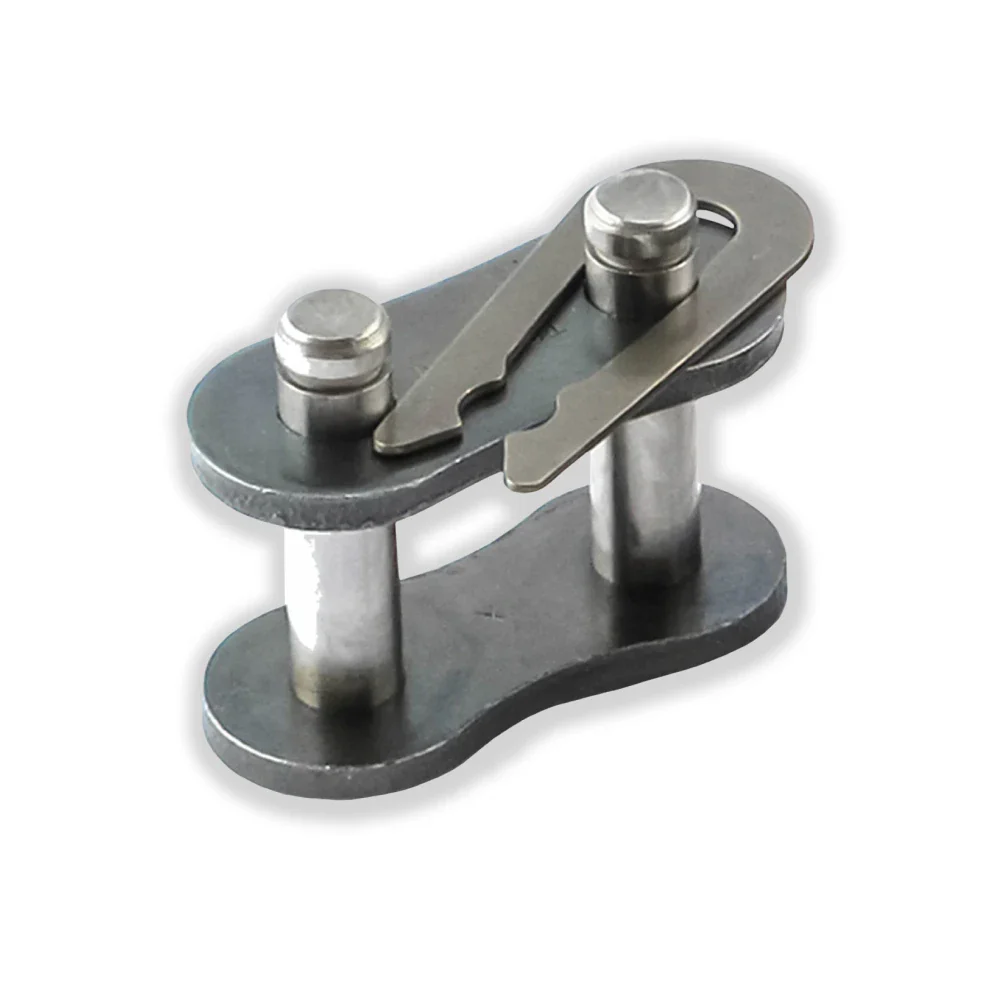
#50 Stainless Steel Connecting Link: Reliable and Corrosion-Resistant Connection
The #50 stainless steel connecting link is designed to join roller chains quickly and securely. It simplifies installation and maintenance in power transmission systems.
In addition, its stainless steel construction provides excellent corrosion resistance. Therefore, it is ideal for harsh or humid environments.
Another key advantage is ease of use. The #50 stainless steel connecting link allows fast assembly without complex tools.
In daily operations, this results in reduced downtime and improved efficiency.
What is a #50 Stainless Steel Connecting Link?
The #50 stainless steel connecting link is used to connect the ends of an ANSI #50 chain.
It is also known as a master link. It enables quick assembly and disassembly.
In practice, it ensures continuous motion transfer in mechanical systems.
Its stainless steel material prevents corrosion and extends lifespan.
H2: What is it used for?
The #50 stainless steel connecting link is used to connect or repair roller chains.
It also allows quick chain adjustments.
It performs well in corrosive environments.
Its main function is to maintain system continuity.
Key Benefits
Corrosion resistance
Stainless steel prevents rust.
Easy installation
Quick and simple setup.
Secure connection
Ensures stable operation.
Versatile use
Suitable for multiple applications.
Technical Specifications
-
Material: Stainless steel
-
Compatibility: ANSI #50 chain
-
Application: Connection and repair
-
Use: Power transmission systems
How to choose the right connecting link
Check chain standard first.
Choose stainless steel for harsh environments.
Match the application requirements.
This ensures safe operation.
Maintenance Tips
Install the clip correctly.
Keep the chain lubricated.
Inspect regularly.
These steps improve durability.
PGN Connecting Link Line
Explore: https://pgnbearings.com/collections/connecting-links
#40 Connecting Link
Light-duty applications
#50 Connecting Link
Standard use
#50 Stainless Steel Connecting Link
Corrosion-resistant
#60 Stainless Steel Connecting Link
Heavy-duty environments
Why Choose PGN Bearings?
ANSI-compliant products.
Material variety.
Fast shipping.
Technical support.

Details & Craftsmanship
Every detail has been carefully considered to bring you the perfect product.

Details & Craftsmanship
Every detail has been carefully considered to bring you the perfect product.

Details & Craftsmanship
Every detail has been carefully considered to bring you the perfect product.

Details & Craftsmanship
Every detail has been carefully considered to bring you the perfect product.
Description
|
ANSI No |
#50SS | MATERIAL | Stainless Steel |
| PITCH | 0.625 inch (15.875 mm) | ROLLER DIAMETER (D1 MAX) |
0.4 inch (10.16 mm) |
| WIDTH BETWEEN PLATES (B1 MIN) |
0.370 inch (9.4 mm) | PIN DIAMETER (D2 MAX) |
0.2 inch (5.08 mm) |
| PIN LENGTH (L MAX) |
0.815 inch (20.70 mm) | PIN LENGTH (LC MAX) |
0.874 inch (22.20 mm) |
| INNER PLATE DEPTH (H2 MAX) |
0.594 inch (15.09 mm) | PLATE THICKNESS (T MAX) |
0.080 inch (2.03 mm) |
| ULTIMATE TENSILE STRENGTH (QMIN) |
22.20/5045 kN/LB | WEIGHT | 0.685 lb/ft (1.02 kg/m) |
Read More
#50 Stainless Steel Connecting Link: Reliable and Corrosion-Resistant Connection
The #50 stainless steel connecting link is designed to join roller chains quickly and securely. It simplifies installation and maintenance in power transmission systems.
In addition, its stainless steel construction provides excellent corrosion resistance. Therefore, it is ideal for harsh or humid environments.
Another key advantage is ease of use. The #50 stainless steel connecting link allows fast assembly without complex tools.
In daily operations, this results in reduced downtime and improved efficiency.
What is a #50 Stainless Steel Connecting Link?
The #50 stainless steel connecting link is used to connect the ends of an ANSI #50 chain.
It is also known as a master link. It enables quick assembly and disassembly.
In practice, it ensures continuous motion transfer in mechanical systems.
Its stainless steel material prevents corrosion and extends lifespan.
H2: What is it used for?
The #50 stainless steel connecting link is used to connect or repair roller chains.
It also allows quick chain adjustments.
It performs well in corrosive environments.
Its main function is to maintain system continuity.
Key Benefits
Corrosion resistance
Stainless steel prevents rust.
Easy installation
Quick and simple setup.
Secure connection
Ensures stable operation.
Versatile use
Suitable for multiple applications.
Technical Specifications
-
Material: Stainless steel
-
Compatibility: ANSI #50 chain
-
Application: Connection and repair
-
Use: Power transmission systems
How to choose the right connecting link
Check chain standard first.
Choose stainless steel for harsh environments.
Match the application requirements.
This ensures safe operation.
Maintenance Tips
Install the clip correctly.
Keep the chain lubricated.
Inspect regularly.
These steps improve durability.
PGN Connecting Link Line
Explore: https://pgnbearings.com/collections/connecting-links
#40 Connecting Link
Light-duty applications
#50 Connecting Link
Standard use
#50 Stainless Steel Connecting Link
Corrosion-resistant
#60 Stainless Steel Connecting Link
Heavy-duty environments
Why Choose PGN Bearings?
ANSI-compliant products.
Material variety.
Fast shipping.
Technical support.